


Best Security Features for Doors That Matter

A front door should feel reassuring every time it closes behind you. The best security features for doors are not usually one dramatic addition, but a set of well-specified components that work together: a strong door and frame, reliable locking, protected hinges, secure glazing and precise installation. Get one of these wrong and an otherwise attractive new door may not give your household the confidence it should.
For homeowners replacing an older entrance door, security is also an opportunity to improve warmth, appearance and day-to-day convenience. The right specification depends on your property, the type of door you choose and how the entrance is used. Here is what is worth looking for before you make a decision.
Start with the door, frame and fitting
Security begins with the structure around the lock. A quality composite door, PVCu door or suitably specified aluminium door should have a solid construction, a reinforced frame where required and a close, even fit within the opening. The frame matters just as much as the door slab itself, because it carries the keeps that receive the locking bolts.
A door that is loose, badly aligned or poorly fixed can make a good lock less effective. It can also become difficult to operate over time, particularly as properties naturally move and settle. During a professional survey, the installer should assess the condition of the opening, measure accurately and identify any issues with surrounding brickwork, thresholds or existing frames.
This is one reason made-to-measure doors are a sensible investment. A properly fitted door should close smoothly without forcing the handle, while leaving no obvious gaps around the frame. Security and draught reduction often come from the same careful attention to detail.
Best security features for doors: the essentials
Multi-point locking
Most modern external doors use a multi-point locking system. Instead of relying on a single latch and deadbolt, the handle engages several locking points along the edge of the door, typically including hooks, rollers, bolts or mushroom cams. When the handle is lifted and the key is turned, the door is secured at multiple positions against the frame.
This distributes force more effectively than a basic single-point lock and makes it harder to force the door open at one location. The number of locking points alone does not tell the whole story, however. The quality of the mechanism, the strength of the keeps and the way the system is fitted are equally relevant.
Ask how the lock operates, what is included as standard and whether the door has been tested to a recognised security standard. A quality door system should provide security without making the door awkward to use every day.
A high-security cylinder
On many PVCu and composite doors, the euro cylinder is the part where your key is inserted. It is small, but it deserves close attention. Older or basic cylinders can be more vulnerable to methods such as snapping, drilling, picking and bumping.
Look for a cylinder designed to resist these common methods of attack. You may see anti-snap, anti-drill, anti-pick and anti-bump described in the specification. British Kitemark and TS 007 ratings are also useful signs that a cylinder and its associated door furniture have been independently assessed.
A common approach is a 3-star cylinder, or a 1-star cylinder used with 2-star security door furniture. The correct choice can depend on the door system and handle design, so it is worth having this explained in plain language rather than simply choosing the cheapest option.
Security handles and an internal thumbturn
The handle should protect the cylinder rather than leave it exposed. High-security handles include a reinforced backplate around the cylinder and are designed to resist pulling or drilling. They are especially important where a cylinder projects too far beyond the handle, which can create a weakness.
An internal thumbturn can also be a practical consideration. It allows occupants to unlock the door from inside without finding a key, which may be helpful in an emergency. However, if there is glazing or a letterplate close enough for someone to reach through, the layout needs extra thought. A knowledgeable survey will consider the whole door design, not just one component in isolation.
Hinge protection
Hinges are often overlooked, particularly on outward-opening doors. Security hinges, hinge bolts or dog bolts help prevent a door being lifted or forced from the hinge side if the hinge pins are attacked.
For inward-opening doors, the hinges are normally inside the property, which reduces this concern. Even so, strong, well-fitted hinges remain important for smooth operation and long-term alignment. The right solution depends on the opening direction and the door style.
Laminated or toughened safety glass
Glazed panels and sidelights can bring valuable daylight into a hallway, but glass should be specified with security in mind. Toughened safety glass breaks into small, blunt fragments if damaged. Laminated glass has an interlayer that helps hold the pane together when broken, making it more difficult to create an opening quickly.
The best option depends on the size and location of the glazed area. Laminated glass can be particularly worthwhile for panels close to locks, handles or letterplates. Decorative glass need not mean compromising on security, provided the glazing specification is suitable for the design.
A secure letterplate or alternative arrangement
A letterplate is convenient, but it can create an opening through the door. A good quality letterplate should be well secured, resist removal from outside and include a flap or internal shield that limits visibility and access.
Where security is a priority, particularly with a glazed door, a wall-mounted post box may be preferable. This removes the opening from the door altogether and can also help reduce draughts. It is not necessary for every home, but it is worth considering during the design stage rather than after the door is installed.
Look beyond the lock to tested door performance
Product testing helps separate meaningful security claims from marketing language. PAS 24 is a recognised UK standard for enhanced security performance of doors and windows. Doors that meet it have been tested against a range of attack methods and should offer a useful level of reassurance for a residential entrance.
Some homeowners may also want to look for door designs suitable for Secured by Design requirements. This police-backed initiative focuses on reducing crime through thoughtful building and product design. Not every property needs the same level of specification, but these benchmarks can make comparisons clearer.
Certification is valuable, yet it should not replace sensible choices about the entrance itself. For example, a rear door that is less visible from the street may benefit from the same strong lock, cylinder and glazing choices as the front door. Patio and French doors need their own secure locking arrangements too, as they can be attractive access points for intruders.
Smart locks: useful, but choose carefully
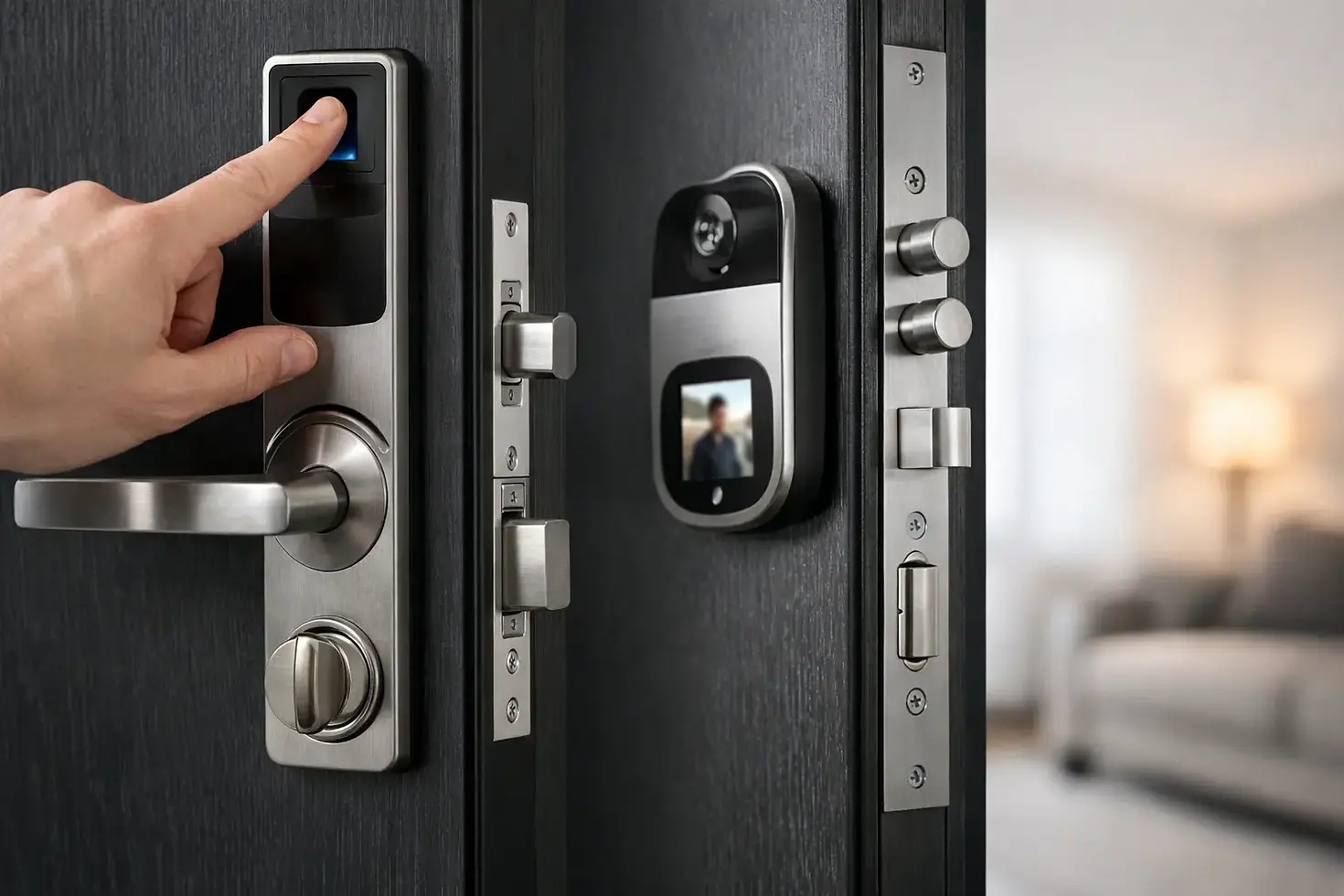
Smart locks can offer keyless access, temporary codes for trusted visitors and notifications when the door has been used. For busy households, these features can be genuinely helpful. A smart lock should not, however, be chosen for convenience alone.
Check that it is compatible with the door's multi-point locking system, retains a dependable manual entry option where appropriate and does not weaken the existing cylinder or handle security. Think about battery changes, app access, who can manage permissions and what happens if your phone is unavailable. The simplest secure solution is often the best one for your household.
Installation is a security feature in its own right
Even the strongest door can underperform if it is not installed correctly. The frame must be fixed securely, the locking keeps must align precisely and the door must operate without excessive pressure or movement. Poor installation can lead to gaps, sticking locks, loose furniture and avoidable call-outs later.
Choose an installer who surveys the property before ordering, explains the options clearly and stands behind the workmanship after fitting. At Filus, this starts with tailoring the door specification to the home rather than treating every entrance as the same. It is the practical details, checked from first measurement to final adjustment, that help a new door keep doing its job for years.
When comparing door quotations, ask what is included in the lock, cylinder, handle, hinge and glazing specification. A clear answer now makes it far easier to choose a door that feels secure, looks right and gives your family confidence whenever you turn the key.


Comments