


How to Reduce Window Draughts at Home Properly

A cold line of air around the edge of a window is more than a minor winter annoyance. It can leave a favourite seat unusable, make the heating work harder and create the sense that your whole home is colder than the thermostat suggests. To reduce window draughts at home effectively, start by finding exactly where the air is getting in. The right answer may be a simple adjustment, but older or damaged windows can need a more lasting solution.
Start by finding the source of the draught
A window can feel cold without actually being draughty. Cold glass naturally draws warmth from the room, especially with older single glazing, and this may feel similar to moving air. A true draught is air entering through gaps around the opening sash, frame, seals or surrounding wall.
On a still, cool day, run your hand slowly around the inside edge of the window, paying particular attention to the corners, handles and the point where the opening section meets the frame. You may feel a noticeable change in temperature. A thin piece of tissue can also help identify airflow, although take care around open flames and do not use a candle for this purpose.
Look outside too. Cracked sealant where the frame meets brickwork or render, gaps around trim, damaged vents and visibly loose sections all deserve attention. In period properties across SW London and Surrey, draughts are sometimes caused by gaps in the surrounding reveal rather than the window unit itself. Treating the wrong area can mean spending money without solving the problem.
Simple ways to reduce window draughts at home
If the frames and glazing are fundamentally sound, a few practical measures can make a worthwhile difference. These are best viewed as sensible maintenance or short-term improvements, rather than a substitute for windows that have reached the end of their serviceable life.
Check the hinges, locks and handles
Modern uPVC casement windows rely on the sash closing evenly against compression seals. If hinges are worn, the handle does not pull the sash in tightly, or the locking mechanism is out of adjustment, small gaps can appear even when the window looks shut.
Clean away dirt from the frame and seals first, then check whether the window closes squarely. A professional can usually assess and adjust compatible hardware where appropriate. Avoid forcing a stiff handle or attempting major hinge adjustments without knowing the system, as this can cause damage or affect how securely the window locks.
Replace tired seals where possible
Rubber gaskets gradually flatten, harden or split with age and weather exposure. Once they no longer form a consistent seal, air can pass around the sash. If replacement seals are available for your window system and the frame remains in good condition, fitting new gaskets can improve comfort at a relatively modest cost.
The profile, size and placement of window seals matter. A generic strip from a DIY shop may not sit correctly, may prevent the window from closing properly or may fail quickly. It is worth having an experienced installer identify the correct seal before committing to a repair.
Repair gaps around the frame
Sealant around the outside of a window is an important weather barrier. When it cracks, shrinks or detaches from the wall, rain and cold air can find a route behind the frame. External sealant should be renewed carefully, with the surrounding surface clean and dry and with the correct product for the materials involved.
Internal gaps can sometimes be sealed or finished neatly with suitable decorator's caulk. However, do not block designed drainage channels or ventilation openings in the frame. These details help the window manage rainwater and moisture, and covering them can create a bigger problem later.
Use temporary draught-proofing thoughtfully
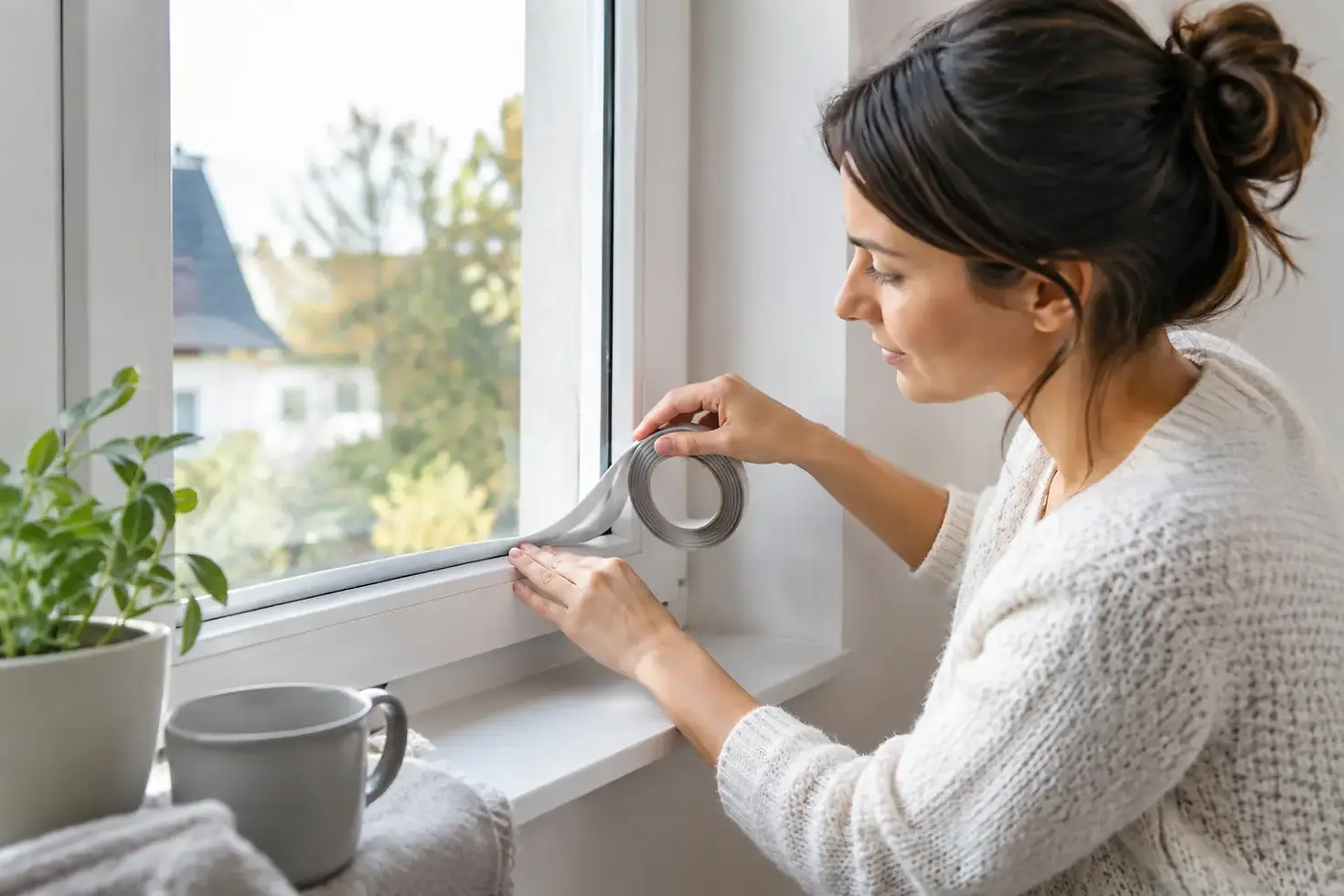
Self-adhesive foam or rubber strips can help around non-opening secondary gaps, and heavy lined curtains can reduce the feeling of cold close to the glass. A temporary interior window film may also improve comfort during a cold spell.
These options have limitations. Foam tape is often too bulky for windows that need to open and lock securely, while curtains should not cover radiators for long periods because they keep heat trapped against the window. Temporary measures are useful when you need immediate relief, but they should not conceal decayed timber, failing glass units or persistent water ingress.
Do not confuse ventilation with a draught
It can be tempting to seal every opening in a room, particularly when energy bills are high. Homes still need controlled ventilation to manage humidity, cooking vapour and everyday moisture from showers and drying clothes. Blocking trickle vents or permanently sealing intended ventilation routes can increase condensation and mould risk.
The aim is not to make a home airless. It is to stop uncontrolled cold air entering through defects while keeping purposeful ventilation available when it is needed. If condensation is regularly forming on the room-side glass, walls or window reveals, consider the wider balance of heating, ventilation and moisture rather than simply adding more sealant.
When repairs are no longer the sensible option
Repair is often worthwhile when the issue is isolated: a worn gasket, a misaligned sash or failed perimeter sealant can be addressed without replacing the whole window. But recurring draughts may point to a broader problem, particularly with older units.
Signs that replacement deserves consideration include frames that are warped or damaged, windows that will not lock securely, repeated failed seals, misting between panes, widespread cold spots, or visible movement between the frame and the wall. Single-glazed windows and older double glazing may also offer limited insulation even after gaps have been repaired.
A made-to-measure replacement window addresses more than the glass itself. Its performance depends on the profile, glazing specification, seals, hardware and the quality of fitting around the opening. A carefully surveyed installation should take account of the property, exposure to weather, room use and the appearance of neighbouring windows. For homes near busy roads, for example, the same upgrade can improve both warmth and outside noise reduction.
There is a cost trade-off. Repairing a sound window is usually less disruptive and less expensive in the short term. Replacing underperforming windows is a larger investment, but may offer a more dependable improvement in comfort, security, appearance and energy efficiency over the years ahead. The condition of the existing units, rather than their age alone, should guide the decision.
What to expect from a professional window assessment
A useful assessment should not begin with a one-size-fits-all recommendation. The installer should inspect how each window opens and locks, examine the frames and seals, look for signs of failed glazing or water ingress, and consider whether the issue is localised or repeated throughout the home.
If replacement is recommended, ask what is included in the specification. Clear answers should cover the frame system, glass type, opening style, ventilation provision, finishing details and how the frame will be sealed and secured. It is also sensible to ask about product and workmanship guarantees, as a window is only as good as the installation around it.
For homeowners who want to reduce window draughts at home without unnecessary work, this diagnosis is valuable. It distinguishes a straightforward maintenance issue from a window that is no longer performing as it should.
A warmer home should not rely on turning the heating higher and hoping for the best. Start with the gap you can feel, address the cause rather than the symptom, and seek tailored advice when the evidence points to a longer-term upgrade. That approach gives you the best chance of a comfortable room, a well-functioning window and confidence through the colder months.


Comments