


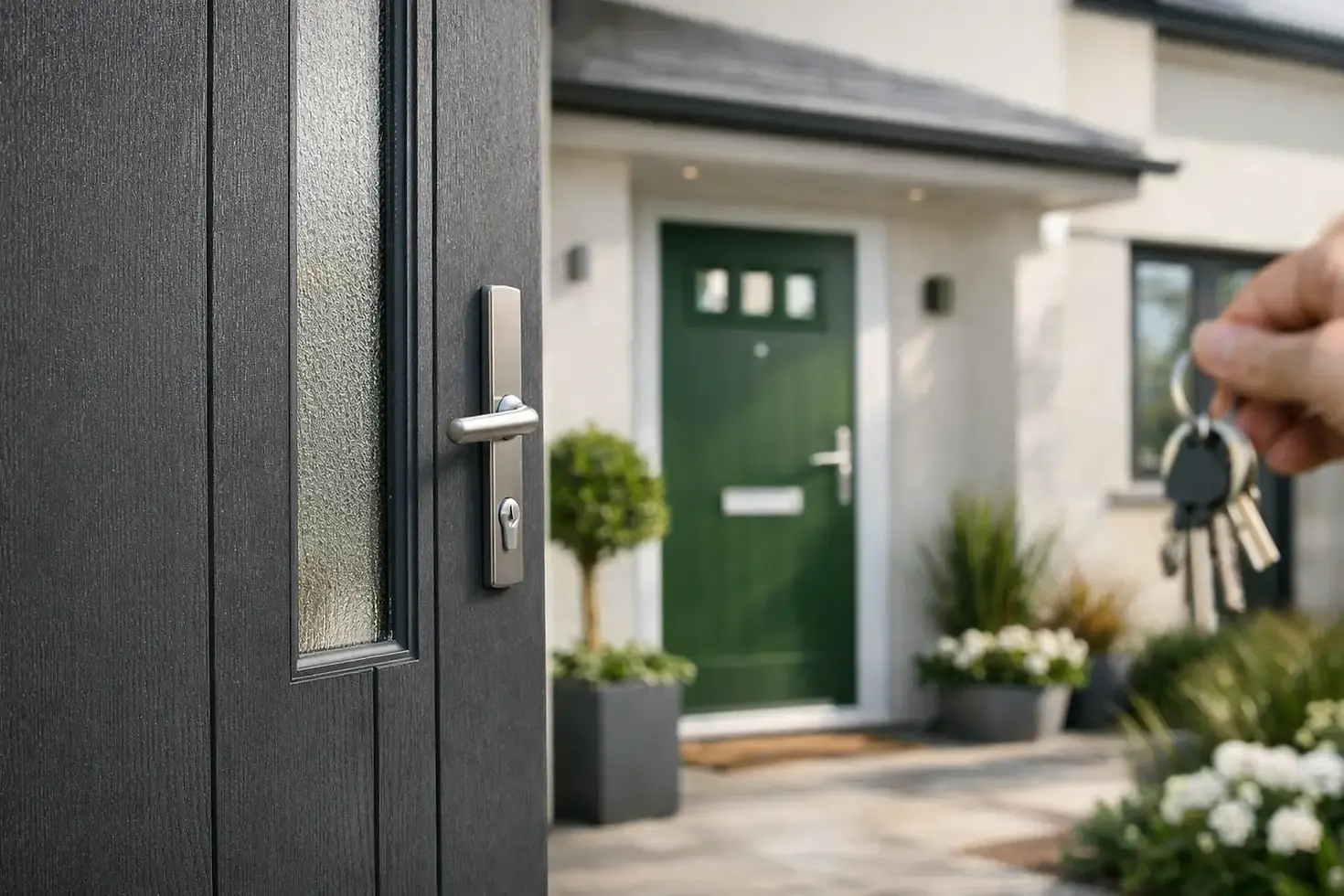
Solidor Composite Doors Review for Homeowners
A front door has a hard job. It needs to look right against the brickwork, cope with wet winter weather, keep unwanted visitors out and close properly every day for years. A Solidor composite doors review therefore needs to look beyond the brochure colours and consider how the door performs once it is part of a real home.
For homeowners replacing a tired timber, uPVC or older composite door, Solidor is often a strong contender. The range is known for substantial construction, traditional and contemporary styling, and a wide choice of finishes and hardware. It is not the cheapest route to a new front door, but it can be a worthwhile investment where security, appearance and long-term confidence matter.
What makes a Solidor door different?
A composite door is designed to combine the strengths of different materials. Rather than relying on a single slab of uPVC or timber, Solidor doors use a solid timber core behind a durable outer skin. This gives the door a noticeably solid feel and helps it resist everyday knocks, changes in temperature and attempts at forced entry.
That weight and rigidity are among the first things many homeowners notice. A well-fitted Solidor door tends to close with a firm, reassuring action rather than the hollow sound sometimes associated with lightweight alternatives. The frame, locking system, hinges, glazing and threshold are equally important, however. A quality door only performs as well as the full specification and installation allow.
The brand is particularly popular with homeowners who want the character of a traditional front door without the regular painting, swelling and upkeep that can come with natural timber. There are cottage-style designs with decorative glazing, clean-lined contemporary options, and bolder colours that can make an entrance feel more personal.
Solidor composite doors review: the main benefits
Security feels like a priority, not an extra
A solid core creates a strong starting point for home security. When combined with an appropriate multi-point locking system, secure cylinder and correctly fitted frame, it offers a serious upgrade from many ageing entrance doors.
The practical point is that security should be specified as a complete package. Ask what lock cylinder is included, whether it has protection against common methods of attack, and how the door is reinforced around the lock area. Letterplates, glazing and side panels also need consideration. A beautifully made door can be weakened by unsuitable hardware or poor fitting.
Better insulation and fewer draughts
Old doors commonly lose heat around the edges rather than through the central panel alone. A new composite door with properly adjusted seals can reduce cold spots and unwanted draughts in the hallway, making the whole entrance feel more comfortable.
Thermal performance will depend on the chosen style. A fully glazed design, for example, will perform differently from a solid door, while a threshold selected for easy access may have different practical considerations from a standard arrangement. The right option is the one that balances warmth, light, access and appearance for your property.
It is sensible not to view a new door as a single answer to high energy bills. If windows, side panels or the porch are also underperforming, heat can still escape through those areas. Nevertheless, replacing a poorly fitting entrance door is often a useful part of a wider efficiency upgrade.
A convincing range of styles and colours
This is one area where Solidor stands out. The choice allows homeowners to avoid the standardised look that can make a replacement door feel out of place. A period property may suit a panelled design with traditional furniture, while a newer home can carry a simpler door, long handle and more contemporary glazing.
Colour needs a little thought. Deep blue, black and heritage green can look excellent, but they may show dust, fingerprints or pollen more readily than mid-tone finishes. A lighter shade can brighten a shaded entrance, whereas a darker colour may give a pale rendered home more definition. Looking at physical colour samples outside, beside your brickwork and in natural daylight, is far more reliable than choosing from a screen.
Glazing is another decision worth taking slowly. It can bring welcome daylight into a dark hall, but the pattern, obscurity level and position should protect privacy. For a front door facing a busy pavement or road, consider what can be seen from outside after dark when indoor lights are on.
Where the trade-offs are
Solidor doors are a premium-style product, so price is the most obvious consideration. The final cost can rise with decorative glass, premium hardware, sidelights, custom colours, access requirements and remedial work to the existing opening. It is rarely helpful to compare quotations based only on the headline figure, as they may not include the same locking specification, trims, threshold, disposal or fitting work.
Their solid construction also means they are heavier than some alternatives. This is a benefit for security and feel, but it makes accurate fitting essential. The hinges must be set correctly, the frame properly secured and the door adjusted so it operates smoothly. A door that catches, drops or needs force to lock is not something to accept as normal.
There is also the question of style longevity. A dramatic colour or oversized statement handle can look striking, but front doors are expected to last. If you are planning to sell within a few years, a design that complements the property may be a safer choice than one driven by a short-lived trend.
Installation matters as much as the door
The difference between a good door and a good door installation is immediately noticeable. Before ordering, the existing opening should be surveyed carefully. Walls are not always square, old frames can hide problems, and porches or tiled floors may affect the threshold detail.
A professional survey should establish the opening size, frame depth, drainage, access requirements and the condition of the surrounding structure. It should also confirm the direction of opening and handle position. These details sound small, but they affect day-to-day use. A door that opens into a narrow hall, clashes with furniture or makes it awkward to bring in a pram is a missed opportunity.
After fitting, check the door in person. It should open and close freely, lock without excessive pressure, sit evenly in the frame and have tidy finishing around the inside and outside. You should also understand how to care for the hardware, operate the lock and raise any concerns after installation.
For homes in SW London and Surrey, local knowledge can be particularly useful where entrances vary widely between Victorian terraces, suburban family houses and newer developments. A made-to-measure solution gives more room to address these differences than an off-the-shelf replacement.
How much maintenance does a Solidor door need?
One attraction of a composite door is that maintenance is straightforward. The surface generally needs occasional cleaning with warm water and a mild, non-abrasive cleaner. Avoid harsh chemicals, scouring pads and solvents, which can damage finishes or hardware.
The moving parts need attention too. Keep the track and threshold clear of grit and leaves, and follow the hardware manufacturer's advice on lubrication. If the lock becomes stiff, do not force the key. A simple adjustment or suitable lubricant may be needed, and early action can prevent damage.
Seals should be checked periodically, especially after very hot or cold weather. Minor adjustments are normal over a door's lifetime, but persistent draughts, sticking or difficulty locking should be investigated rather than ignored.
Is a Solidor composite door worth the money?
For many homeowners, yes - provided the specification suits the property and the installation is carried out properly. Solidor doors offer the reassuring weight, security-focused construction and design flexibility that make a front-door replacement feel like a genuine improvement rather than a cosmetic swap.
They may not be the right choice for every budget. A simpler uPVC door can be a sensible option for a rental property, side entrance or project with tight cost limits. Equally, a timber door may still be preferred where original period detailing is the priority and regular maintenance is acceptable. The best choice depends on how you use the entrance, what the house needs and how long you expect the door to serve you.
Before deciding, ask to see samples, compare the full written specification and make sure the quotation explains exactly what is included. A good installer will help you weigh up the practical details, not simply steer you towards the most expensive option. That considered approach is what turns a new front door into a lasting improvement to your home.


Comments