


What Is a Composite Door?
A front door has a lot to do. It needs to keep heat in, stand up to British weather, feel secure when you lock up at night, and still look right from the kerb. That is why so many homeowners ask what is a composite door before deciding on a replacement.
In simple terms, a composite door is a door made from a combination of materials rather than a single material such as timber or uPVC alone. Those materials are chosen to work together, so the finished door offers a balance of strength, insulation, weather resistance and appearance. It is designed to solve some of the weaknesses that older door types can have when used on their own.
What is a composite door made of?
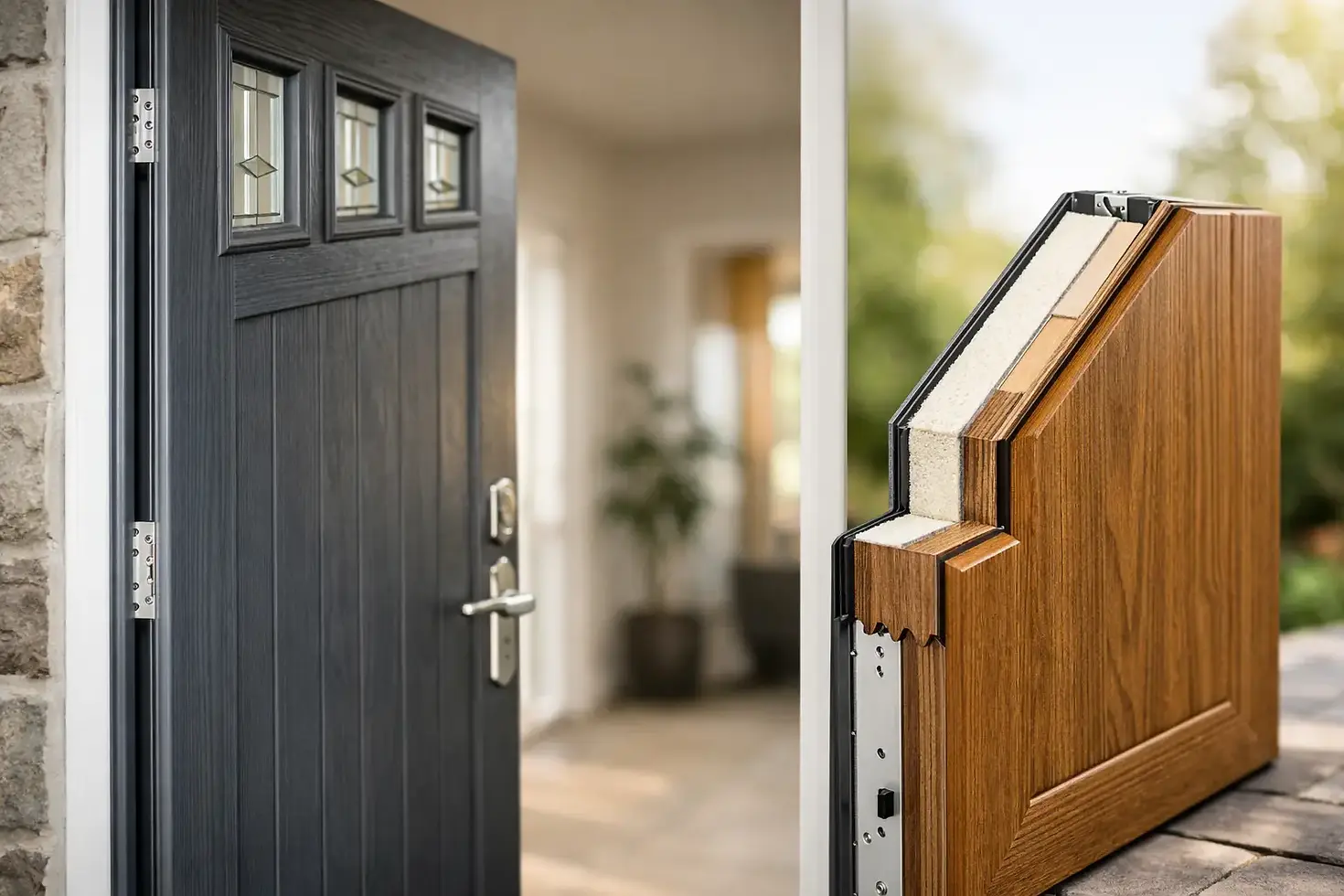
The exact build can vary by manufacturer, but most composite doors have a solid or high-density core, an outer skin, internal reinforcement and a durable frame system. The idea is straightforward. Instead of relying on one material to do everything, each layer contributes something different.
The core is often made from insulating foam or a dense engineered material that helps with thermal performance and rigidity. Around that, the outer skin is usually formed from Glass Reinforced Plastic, often shortened to GRP, or another tough weather-resistant finish. This outer layer helps the door cope with rain, wind, sunlight and day-to-day knocks without the same level of upkeep associated with traditional timber.
Many composite doors also include reinforced sections, quality seals and multi-point locking systems. That combination is one reason they are often chosen for main entrances, where security and performance matter most.
Why composite doors became so popular
Older timber doors can look excellent, but they often need regular maintenance to stay that way. Standard uPVC doors are usually low maintenance and cost-effective, but some homeowners want a more solid feel and a more premium appearance. Composite doors sit between these two options in a way that appeals to many households.
They are popular because they can offer the look of a painted timber door with more modern performance. For busy homeowners, that matters. A door that looks smart, resists warping and does not need frequent repainting is easier to live with over the long term.
There is also the issue of comfort. If your current front door lets in draughts or feels cold in winter, replacing it can make the entrance hall feel noticeably better. A well-made, properly fitted composite door can help reduce heat loss and improve the day-to-day feel of the home.
What is a composite door good for?
The short answer is that a composite door is good for homes where you want a strong all-rounder. It suits properties that need better energy efficiency, a more secure entrance and an updated external appearance without taking on a high-maintenance product.
That said, the benefits depend on the quality of the door and the installation. A premium composite door fitted correctly should close cleanly, seal well and feel substantial in use. A lower-grade version may still look similar in a brochure but perform quite differently over time.
This is why product choice and installation both matter. The door slab, frame, glazing, hardware and fitting standard all affect the final result.
Composite doors compared with uPVC doors
This is often the first comparison homeowners make, and it is a sensible one. Both options can be low maintenance, both are available in a wide range of styles, and both can improve energy efficiency compared with an old, worn door.
Where composite doors often stand out is in their weight, feel and finish. They usually feel more solid when opening and closing, and many people prefer the more substantial appearance. They can also offer deeper detailing, more convincing woodgrain effects and a broader choice of premium designs.
uPVC doors still have their place. They can be a practical and budget-friendly option, especially for side entrances or where cost is the deciding factor. But if the front door is a key feature of the property, many homeowners prefer the step up in appearance and performance that a composite door can provide.
Composite doors compared with timber doors
Timber remains a classic choice and can look exceptional, particularly on period homes. In the right setting, a well-made timber door may be exactly the right answer. But it usually requires more upkeep to protect it from moisture, movement and surface wear.
Composite doors are often chosen by homeowners who like the traditional look of timber but want less maintenance. They are built to resist swelling, twisting and weather-related wear more effectively than many older timber doors. That does not mean they are identical to real wood, because they are not. If authentic natural timber grain is your priority above all else, you may still prefer timber.
For many households, though, the trade-off is worth it. Composite gives a similar visual style with a more practical ownership experience.
Security and peace of mind
For most families, front door security is not just a specification on paper. It is about confidence. You want the door to feel strong, lock properly and hold up well over time.
Composite doors are often associated with strong security because they are typically built with durable cores, reinforced components and modern multi-point locking systems. Many are tested to recognised standards, although this varies by product range. The quality of the cylinder, hinges, glazing and installation all play a part here, not just the door material itself.
So if security is a major priority, it is worth looking at the full door set rather than assuming all composite doors are the same. A good installer should explain what is included and whether the product meets the standards you expect.
Energy efficiency and comfort
A draughty front door can make a hallway feel permanently cold. It can also make the whole house feel less comfortable than it should. Composite doors are generally designed with insulation and tight weather seals in mind, which can help reduce heat loss.
This is especially useful in homes with older entrance doors that no longer seal properly. You may notice fewer cold spots near the entrance and less of that chill that creeps in around the frame on windy days.
Of course, the door is only one part of the entrance area. Glazing panels, thresholds and the frame all affect thermal performance too. A well-specified door fitted neatly into the opening will usually outperform a good door that has been poorly installed.
Design, colour and kerb appeal
One of the strongest reasons people choose composite is appearance. There is a wide choice of styles, from traditional cottage designs to more contemporary doors with clean glazing lines and bold colours.
That flexibility makes them suitable for many different property types. A Victorian terrace, a 1930s semi and a newer build may all need a different look, and composite ranges are broad enough to support that. You can usually choose from various glass designs, hardware finishes and panel layouts to get a more tailored result.
For homeowners investing in a broader exterior upgrade, the door often becomes the finishing touch. A well-chosen entrance can lift the whole front elevation and make the property feel better cared for.
Are there any downsides?
There can be, depending on your priorities. Composite doors are usually more expensive than standard uPVC doors, so the upfront cost is higher. For some households, that is justified by the improved appearance, feel and performance. For others, the budget may point elsewhere.
There is also a wide range in product quality. Some composite doors are genuinely excellent. Others are built to hit a price point and may not deliver the same finish, weight or long-term durability. This is one area where brand, specification and installer experience really matter.
And while composite doors are low maintenance, low maintenance does not mean no maintenance. Hinges, seals and hardware still need occasional care, and the door should be cleaned and checked from time to time.
What is a composite door best for in a real home?
In practical terms, it is often best for the main entrance where first impressions, daily use and security all come together. If your current front door feels tired, lets in draughts or no longer suits the style of your home, a composite replacement can be a very balanced choice.
It can work particularly well for homeowners who want something smarter and more substantial than a basic uPVC door, but without the regular upkeep that timber may demand. In areas such as SW London and Surrey, where homes vary widely in age and style, that flexibility is part of the appeal.
The best results usually come from treating the door as a made-to-measure part of the property rather than a standard off-the-shelf product. That means looking at design, glazing, colour, security features and installation as one package.
If you are weighing up options, the right question is not only what is a composite door, but whether it suits the way your home is used. A good front door should feel right every day, not just look good on installation day.


Comments