


Secure Front Door Features That Protect Your Home
A front door has to do far more than look good from the pavement. It needs to cope with daily use, changing weather and the occasional heavy-handed delivery while helping your family feel safe at home. The best secure front door features work together: a strong door slab, a well-fitted frame, quality locks and professional installation all matter.
For homeowners replacing an older timber or uPVC door, security is often one of the biggest reasons to upgrade. Yet it is easy to focus on one visible item, such as a lock cylinder, and overlook the parts that make it effective. Here is what to look for when choosing a secure new front door.
Secure front door features that make a real difference
A solid, reinforced door construction
The door itself is the starting point. A thin or weakened door panel can compromise an otherwise good locking system, particularly if it has suffered years of swelling, warping or repeated repairs.
Composite doors are a popular choice because they combine a durable outer skin with a dense, insulated core. They are designed to resist everyday knocks and forced entry better than many older-style doors, while offering the look of timber without the same maintenance demands. Quality uPVC doors can also provide strong performance when they use reinforced sections and are specified correctly for the opening.
The right material depends on the appearance you want, your budget and the style of the property. A period home may suit a carefully chosen composite design with traditional detailing, while a contemporary uPVC door can be a practical option for a modern property. In either case, ask how the door is reinforced and what security standard the complete door set is designed to meet.
A frame that is as strong as the door
The frame is not an accessory. It holds the hinges, lock keeps and door in position, so it must be strong, properly aligned and securely fixed to the surrounding structure.
A door can have excellent locks but still underperform if the frame moves, the keeps are poorly fitted or there are excessive gaps around the edge. Reinforced uPVC frames and correctly specified composite door frames help provide a secure fixing point for the locking system. During a survey, an experienced installer should assess the condition of the existing opening, not simply measure it.
This is one reason made-to-measure installation matters. A replacement door should be fitted for your particular property rather than forced into a standard size that leaves awkward gaps or requires unnecessary packing.
Multi-point locking
A multi-point lock secures the door at several positions when the handle is lifted and the key is turned. Depending on the design, these points may include hooks, rollers, bolts or deadbolts along the locking edge.
Rather than concentrating security in one central area, multi-point locking spreads the holding force across the height of the door. This helps keep the door tightly engaged with the frame and makes it harder to force the opening apart.
The lock needs to be used properly to provide its intended protection. On many doors, lifting the handle engages the locking points, while turning the key deadlocks them. It is worth making this part of your routine whenever you leave the house or go to bed. If your existing handle feels loose, the key sticks or the door has to be pushed hard to lock, arrange for it to be checked. A lock that is difficult to operate is not something to ignore.
A high-security cylinder and handle
For doors with an external key cylinder, the cylinder is a key security component. Look for a high-security cylinder designed to resist common methods of attack, including snapping, drilling and picking. A cylinder that meets the appropriate recognised security standard gives more reassurance than a basic replacement part.
The handle should also be strong enough to protect the cylinder behind it. Security handles with a reinforced backplate can make it more difficult to gain access to the lock mechanism. This detail is especially relevant for doors where the cylinder sits proud of the handle or frame.
It is sensible to discuss key control too. If several previous owners, tradespeople or tenants may still have keys to an existing door, a new cylinder or complete replacement door gives you a clear fresh start. Choose a system that is convenient for the household, but avoid sacrificing proven mechanical security purely for a gadget-led feature.
Secure hinges and hinge protection
Hinges are easy to overlook because they sit on the inside when the door is closed. For outward-opening doors in particular, they need careful consideration, as the hinge side may be more exposed.
Well-made hinges should be fixed securely and able to carry the door's weight without sagging. Some door designs also include hinge bolts or security studs. These engage with the frame when the door is shut, providing additional protection if someone attempts to attack the hinge side.
A door that has dropped over time can affect both security and weather performance. You may notice daylight around an edge, draughts, catching at the threshold or a need to lift the handle with unusual force. Prompt adjustment can prevent a small alignment issue becoming a more costly repair.
Security-rated glazing and glazing beads
Glass panels and sidelights can bring welcome natural light into a hallway, but they need to be specified with care. The answer is not necessarily to avoid glazing altogether. Modern doors can incorporate toughened or laminated safety glass while retaining privacy through obscure, patterned or decorative designs.
The position of the glazing matters. Glass close to a lock should be designed so that breaking it does not provide easy access to the internal handle or key. Internally fitted glazing beads are another valuable detail, as they cannot be removed from outside in the way older externally beaded systems sometimes could.
For families, safety glass also offers everyday benefits. Toughened glass is designed to break into smaller fragments if it fails, while laminated glass holds together with an interlayer. Your installer can explain which option suits the design and location of your door.
A secure letterplate and door viewer
A letterplate is a small opening, but it should not create an easy route to the internal lock. A well-designed, secure letterplate helps reduce the risk of someone reaching or manipulating the door furniture from outside. If you are concerned about privacy or draughts, an internal flap can also improve comfort.
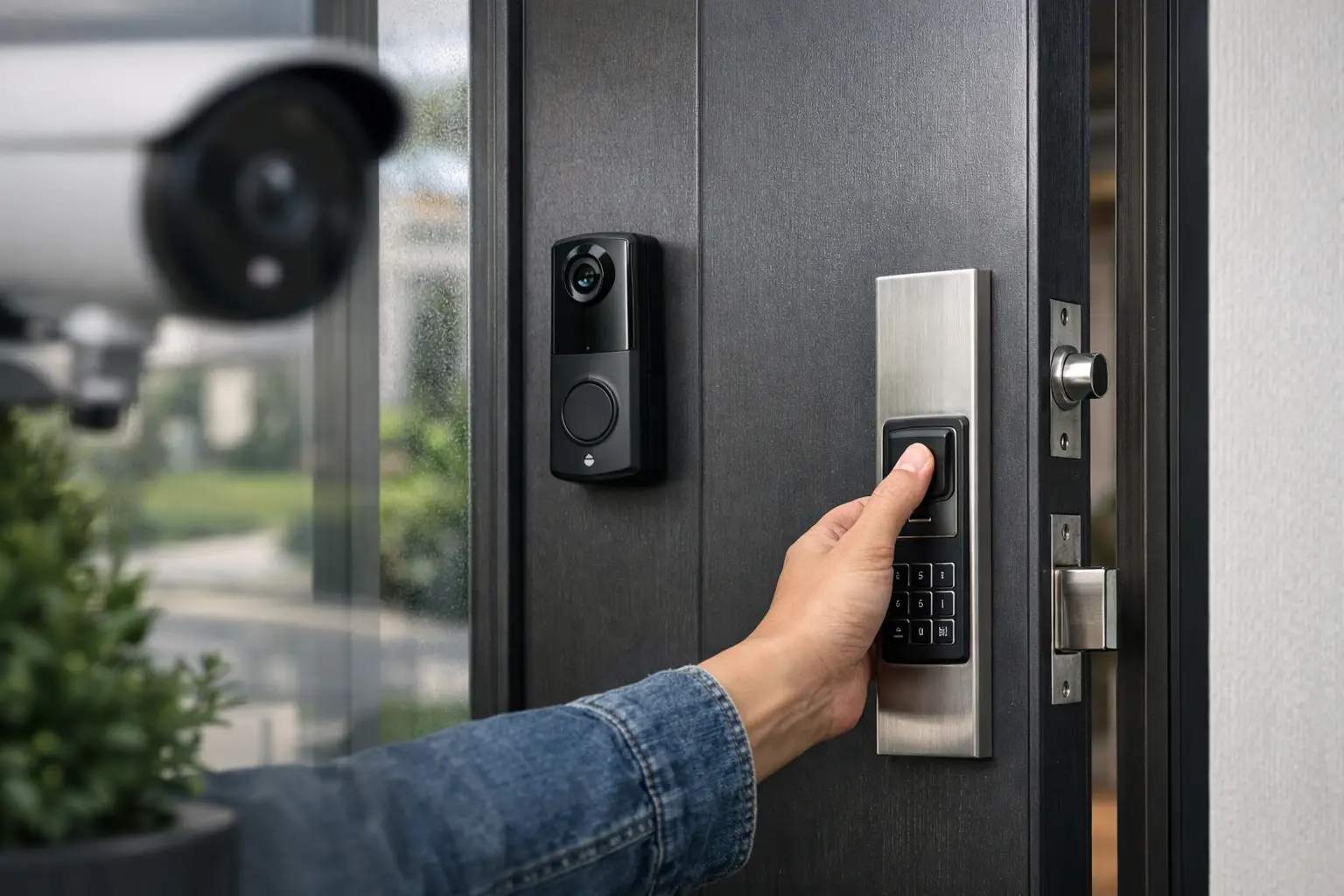
A door viewer, or a carefully positioned glazed panel, lets you identify callers before opening the door. Video doorbells can be useful too, particularly when you are away from home, but they should complement rather than replace the physical security of the door and lock.
Security standards: look at the whole door set
When comparing doors, ask whether the complete product has been tested to a recognised security standard, not just whether one individual component has a rating. The door slab, frame, lock, hinges, hardware and glazing must perform as a system.
In many replacement projects, homeowners will come across PAS 24. This is a recognised British security standard for doors and windows, covering resistance to a range of attack methods. Requirements can vary depending on the property and whether it is a new build or replacement installation, but PAS 24-tested options are a useful benchmark when security is a priority.
You should also check the product guarantee and the installer’s workmanship cover. A quality door is only as secure as its fitting. Poorly packed frames, badly aligned keeps or unsuitable fixings can undermine the specification you have paid for.
Do not overlook weather performance and visibility
A secure door should close comfortably and seal properly. Draughts, water ingress and rattling can be signs that adjustment or replacement is needed, but they can also point to a door that no longer sits firmly in its frame.
External lighting deserves attention as well. A well-lit entrance is more welcoming for you and less attractive to someone who does not want to be seen. Consider a light near the front door, clear sightlines from the house where practical, and house numbers that visitors can read without searching around the porch.
There is always a balance to strike. Very decorative glazing, smart access systems or traditional hardware may be exactly right for your home, provided they are selected alongside sound construction and tested security features. The aim is not to make your entrance look defensive. It is to make it reliably secure, comfortable and suited to how you live.
When choosing a new door, ask for a clear explanation of the frame reinforcement, lock type, cylinder, hinges, glazing and security testing. A careful survey and professional installation will then turn those specifications into a front door you can close each evening with confidence.


Comments